November in Northeast Kansas is when the real cold arrives. Hard freezes settle in across Lawrence, Topeka, Kansas City, and Johnson County, dropping overnight temperatures well below freezing and signaling the end of outdoor activity for most pests. Mice, voles, boxelder bugs, and cluster flies respond the same way every year: they move indoors seeking thermal refuge. Walls, attics, and crawl spaces become preferred overwintering sites once exterior temperatures fall.
Many homeowners respond by installing new weatherstripping on exterior doors and windows. That step is worthwhile for energy efficiency, but it is rarely enough to keep winter invaders out. Mice can compress their bodies to fit through openings the width of a pencil. Voles exploit small foundation gaps. Overwintering insects such as boxelder bugs and cluster flies enter through vents and utility penetrations that weatherstripping never touches. A complete November seal-up requires addressing the structural entry points that standard DIY kits ignore.
The Seasonal Push Driving Pests Indoors
In Douglas County, Shawnee County, and the Kansas City metro, the first sustained hard freezes typically occur in November. Once ground temperatures drop, mice and voles abandon outdoor burrows and move toward the warmth radiating from foundations and utility lines. Boxelder bugs leave host trees and congregate on sunny south- and west-facing walls before slipping into wall voids and attics. Cluster flies, which develop in soil as larvae of earthworms, seek protected voids as adults when temperatures fall.
These pests are not simply looking for food. They are seeking stable temperatures that stay above freezing. Once inside wall cavities or attic insulation, they can remain for months. Mice leave droppings, urine, and gnaw marks. Cluster flies and boxelder bugs die in large numbers in attics and wall voids, creating odors and attracting secondary pests. The problem compounds when multiple species enter the same structure.
Homeowners who only weatherstrip doors and windows often discover activity later in the winter, long after the insects or rodents have settled in. By that point, exclusion is more difficult and trapping or treatment becomes necessary.
Why Weatherstripping Alone Fails
Weatherstripping seals the moving parts of doors and windows. It does nothing for the fixed openings that exist on virtually every home built in Northeast Kansas:
- Foundation weep holes and mortar joints that have opened over time
- Utility penetrations where electrical conduit, plumbing lines, cable, and HVAC refrigerant lines enter the structure
- Soffit and ridge vents that allow attic access
- Gaps around dryer vents, exhaust fans, and chimney chases
- Spaces where siding meets the foundation or where brick veneer meets wood framing
- Unsealed openings under decks or around crawl-space vents
A mouse needs roughly a ¼-inch opening. Many of the gaps listed above are larger. Insects require even less space. Store-bought foam, caulk, and copper mesh sold at big-box stores can temporarily reduce entry, but they often fail under freeze-thaw cycles, UV exposure, or rodent gnawing. Temporary materials also leave the homeowner without a clear picture of every entry point that exists.
What Professional Exclusion Actually Involves
Effective winter protection begins with a thorough exterior and accessible interior inspection. At Laser One Pest Management, rodent control includes identifying openings, sealing access areas, and placing professional-grade trapping where activity is confirmed. The goal is to stop new invaders from entering while addressing any animals already inside.
A complete exclusion process typically covers:
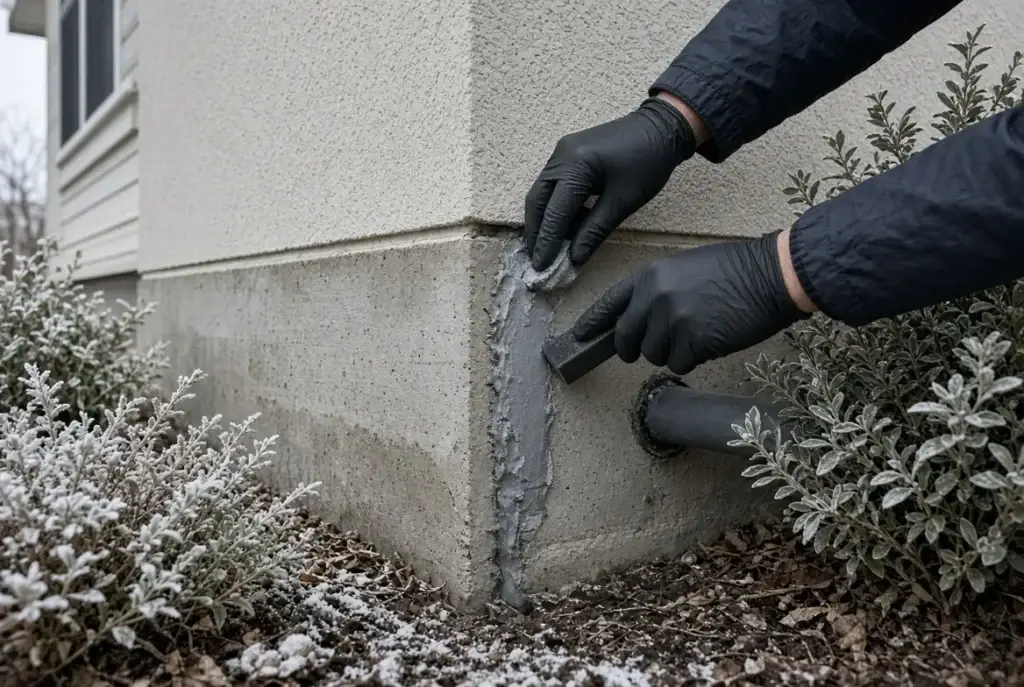
- Sealing foundation gaps, weep holes, and utility penetrations with materials that resist weathering and rodent chewing
- Screening or sealing soffit, ridge, and gable vents while maintaining proper attic ventilation
- Addressing gaps at the intersection of different building materials
- Installing door sweeps and threshold seals that complement, rather than replace, structural sealing
- Monitoring and trapping in areas where mice or insects have already established themselves
This approach differs from temporary DIY fixes because it treats the structure as a system. Sealing one area while leaving others open simply redirects pests to the next available entry. Professional-grade materials and systematic coverage reduce the likelihood of re-entry the following season.
Local Conditions and Why Experience Matters
Homes in Lawrence, Topeka, and the Kansas City metro face similar seasonal pressures, but construction types and pest behavior vary by neighborhood and age of the structure. Older homes near the Kansas River or in established Lawrence neighborhoods often have multiple foundation and utility openings. Newer construction in Johnson County suburbs may have tighter envelopes overall but still contain unsealed penetrations at the time of original construction. Vole pressure is higher in areas with adjacent open fields or landscaping that provides cover. Boxelder bug activity concentrates where female boxelder trees are present within a few hundred feet of the home.
Laser One Pest Management has served Northeast Kansas since 2001 and is licensed in both Kansas and Missouri. Technicians are Purdue University certified in Integrated Pest Management and focus on environmentally responsible methods. The company has been voted the second-best pest control company in Lawrence in both 2023 and 2024. Local knowledge of building practices, seasonal pest movement, and effective exclusion materials is the practical advantage for homeowners preparing for winter.
Related reading on the site includes our overview of pests in the winter and a discussion of why mice traps don’t always cut it when exclusion is incomplete. Homeowners considering only store-bought solutions may also want to review the risks of DIY pest control methods.
Preparing Your Home This November
The most effective time to address winter entry points is before sustained hard freezes drive large numbers of pests indoors. A professional inspection identifies the specific gaps on your property rather than relying on general advice. Sealing those points, combined with targeted trapping where needed, reduces the chance of discovering activity in January or February.
Service is available throughout Lawrence, Topeka, Kansas City, Johnson County, and surrounding Northeast Kansas communities. Details on coverage for specific areas are available on the location pages, including Lawrence, Topeka, Kansas City, KS, and Overland Park. Full pest management services, including rodent inspection and exclusion, are outlined on the services page.
If you are preparing your home for the winter drop, schedule an inspection now. Call Laser One Pest Management at 785-760-2754 or use the contact form to request a free consultation. Addressing structural entry points before the hard freezes set in is the most reliable way to keep mice, voles, boxelder bugs, and cluster flies outside where they belong.